Choosing the right orthodontic treatment comes down to your goals, your lifestyle, and the complexity of your bite. Our team at Shine Pediatric Dentistry & Orthodontics helps kids, teens, and adults compare every option side by side so the decision feels clear instead of overwhelming. If you’ve been asking yourself which orthodontic treatment is right for me, this guide walks through each path and what to expect so you can weigh the trade-offs with confidence.

What Is Orthodontic Treatment?
Orthodontic treatment is the process of correcting the position of your teeth and jaws so they fit together properly and look their best. Dr. Michael Seelig focuses on care tailored to every age group, from early childhood through adulthood, with a plan built around the way you actually live.
Most patients come in with one (or several) of these concerns:
- Crowding: not enough room for teeth to line up
- Spacing: gaps between teeth
- Overbite: upper teeth that sit too far over the lower teeth
- Underbite: lower teeth that extend past the upper teeth
- Crossbite: teeth that don’t meet correctly from side to side
- Open bite: front teeth that don’t touch when biting down
Treatment falls into two main categories: braces (metal, clear ceramic, or WildSmiles) and clear aligners like Invisalign. Each works differently, and each has strengths depending on the case.
Picking the right option matters because it affects how comfortable you feel day to day, how long you’re in treatment, and how confident you are with the final result.
How Each Orthodontic Treatment Works
Each type of orthodontic treatment moves teeth using steady, gentle pressure, but the tools and the experience are different. Here’s how the main options at Shine work.
Metal Braces
Metal braces use stainless-steel brackets bonded to each tooth and connected by a thin archwire. The wire guides teeth into position, and small elastic ties hold everything in place. Dr. Mike adjusts the wire every 4 to 8 weeks to keep progress moving. Treatment time typically ranges from 12 to 24 months, depending on complexity.
Clear Braces
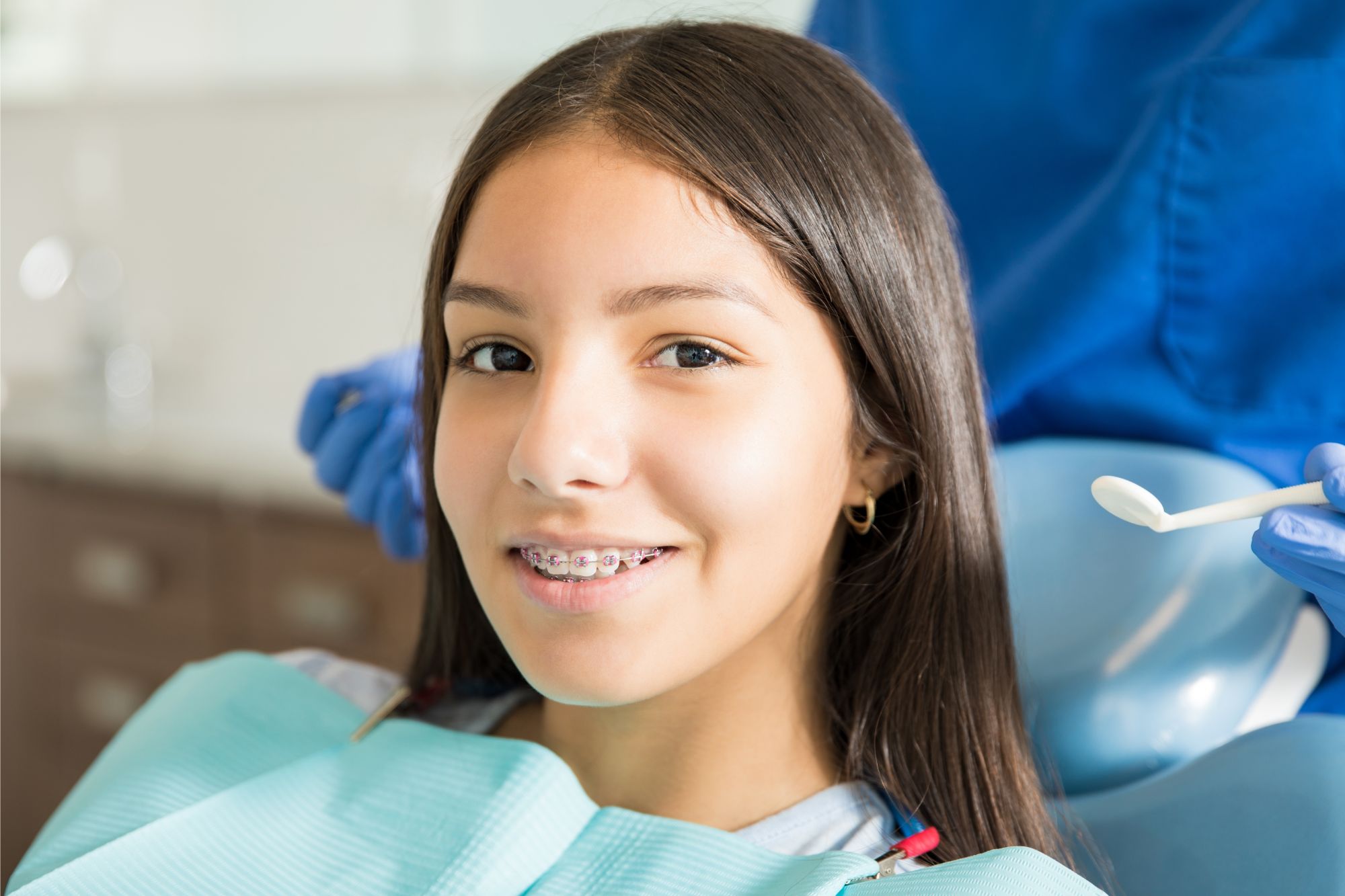
A clear braces system works the same way as metal braces, but the brackets are made from tooth-colored ceramic. They blend in with your natural enamel, which makes them a popular pick for teens and adults who want a more discreet look without switching to aligners.
WildSmiles Braces
Looking for something with a little personality? WildSmiles brackets come in fun shapes like stars, hearts, footballs, and flowers. They move teeth just as effectively as traditional metal brackets, but they let kids and teens show off their style while their smile transforms.
Invisalign
With Invisalign, treatment relies on a series of custom-made, BPA-free clear aligner trays. You wear each tray for about 1 to 2 weeks, then switch to the next one in the sequence. Trays are removable for eating, brushing, and flossing. Most patients need to wear them 20 to 22 hours a day for the best results. Treatment length varies by case, but many finish in roughly 12 to 18 months.
Treatment Timelines at a Glance
- Mild cases: around 6-12 months
- Moderate cases: 12-18 months
- More complex cases: 18-24+ months
Benefits of Each Treatment Option
Every option has its own strengths. The right fit depends on how you live, what you want your smile to look like during treatment, and how involved you want to be in the process.
Metal Braces
- Durable and reliable
- Handles the widest range of cases, including complex bite corrections
- Colored bands let kids pick a new look at each visit
Clear Braces
- Blend in with natural tooth color for a subtle appearance
- Reliable results for most alignment and bite cases
- A good choice for adults in professional settings
- Teens who want a less noticeable look often prefer them
WildSmiles Braces
- Shaped brackets add personality
- Delivers the same tooth-movement power as standard brackets
- Can make treatment feel more engaging for younger patients
- Makes the experience feel personal, not clinical
Invisalign
- Nearly invisible when worn
- Removable for meals, brushing, and flossing
- Easier to keep teeth and gums clean
- No wires or brackets to irritate cheeks
- Fewer in-office visits for most patients
Lifestyle Fit
If you play contact sports or a wind instrument, Invisalign can be easier to manage because you can take it out. For public speakers, actors, or anyone self-conscious about appearance, clear braces or Invisalign offer a more low-key look. Kids who love expressing themselves often gravitate toward WildSmiles or colorful bands on metal braces.
Oral Hygiene During Treatment
Keeping teeth clean matters more than ever during orthodontic treatment. Invisalign has an edge here because trays come out for brushing and flossing. With braces, you’ll need a few extra tools (like floss threaders or a water flosser) to clean around brackets and wires. Dr. Mike and the team walk every patient through what to use and how to use it, step by step, so your home care routine feels doable from day one.
Braces vs Invisalign vs Clear Braces: Comparison
Still weighing braces vs Invisalign (or clear braces vs the rest)? Here’s a quick side-by-side look at how the main clear aligners vs braces options stack up.
| Feature | Metal Braces | Clear Braces | Invisalign |
|---|---|---|---|
| Visibility | Most visible | Low visibility | Nearly invisible |
| Treatment Time | 12-24 months | 12-24 months | 12-18 months (most cases) |
| Removable | No | No | Yes |
| Best For | Mild to severe cases | Mild to moderate cases | Mild to moderate cases |
| Adjustment Visits | Every 4-8 weeks | Every 4-8 weeks | Every 6-10 weeks |
| Food Restrictions | Yes (sticky, hard foods) | Yes (sticky, hard foods) | None (remove to eat) |
| Hygiene Effort | Higher | Higher | Lower |
| Durability | Very high | Moderate (brackets can stain) | Replace trays if lost |
Best Use Cases
- Mild alignment issues: any option works. Many patients choose Invisalign for discretion.
- Moderate crowding or spacing: braces or Invisalign both do well. Clear braces offer a nice middle ground.
- Severe bite issues or rotations: metal braces often handle these cases most predictably.
Comfort and Adjustment
Both braces and Invisalign feel tight for a day or two after each adjustment or tray change. That’s a sign teeth are moving. Invisalign tends to feel smoother on the cheeks because there are no brackets. Today’s braces use smaller, lower-profile brackets with rounded edges and lighter wires, so they sit flatter against the teeth and feel more comfortable than older designs.
What Shapes Your Treatment Plan
Your treatment plan depends on a few key variables, not just the type of appliance you choose. Case complexity, treatment length, and material all play a role. At Shine, every new patient starts with a free orthodontic consultation so you know what to expect before committing.
Here’s what typically shapes your plan:
- Case complexity: simple spacing fixes call for a different plan than full bite corrections
- Treatment length: longer cases need more visits and materials
- Material differences: metal brackets, ceramic brackets, and custom aligner trays each suit different cases
- Number of adjustments: more visits mean more time in the chair
- Retainers: included in treatment planning to protect your results
Dr. Mike and our team will walk you through your plan at your free consult so there are no surprises, and we’re happy to answer any question before you make a decision.
Who Is a Candidate for Each Treatment?
Almost everyone can benefit from orthodontic treatment, but the best option depends on age, bite complexity, and daily habits. Here’s how to think about each group among the different orthodontic treatment options.
Kids (Ages 7-10)
Dr. Lauren, our dedicated kids’ dentist, works alongside Dr. Mike to spot early signs that interceptive treatment might help. Phase 1 orthodontics can guide jaw growth, create room for permanent teeth, and reduce the need for extractions later. Common tools at this stage include partial braces or expanders.
Teens
Teens have the widest range of choices:
- Metal braces for reliability and personality (colored bands)
- WildSmiles for a creative, fun look
- Clear braces for a more subtle appearance
- Invisalign Teen for maximum discretion and flexibility
The right pick often comes down to responsibility level. Invisalign requires 20-22 hours of daily wear, so teens who can commit to that tend to do best with aligners.
Adults (Best Braces for Adults)
Adult orthodontics is more popular than ever. At Shine, one in every five new orthodontic patients is over 18. Adults tend to prefer discreet options like clear braces or Invisalign, especially for work and social settings. Severity of the case still guides the recommendation.
Severity Matters
- Mild cases: aligners or any braces option
- Moderate cases: braces or Invisalign both work well
- Severe cases: metal braces are often the most predictable choice
Commitment Level
Invisalign only works if you wear the trays. For patients who may struggle to keep up with that routine, braces are a better match because they work 24/7 with no effort required.

Frequently Asked Questions
How do I know if I need braces or clear aligners?
The best way to find out is a free orthodontic consultation. Dr. Mike will examine your bite, take a few images, and talk through your goals. Mild to moderate cases often qualify for either option. More complex bite issues may do better with braces. Your lifestyle, age, and preferences factor into the final recommendation.
Which orthodontic treatment is fastest?
Treatment speed depends on your case, not just the appliance. For mild cases, Invisalign can sometimes finish in as few as 6-12 months. More involved cases, whether with braces or aligners, generally run 18-24 months. There’s no shortcut that works for every patient, which is why personalized planning matters.
Are clear aligners as effective as braces?
For mild to moderate alignment and bite issues, yes. Modern Invisalign technology handles a wide range of cases that would have required braces years ago. For complex rotations, severe crowding, or large bite corrections, braces often give more predictable results. Dr. Mike will tell you honestly which option fits your case best.
Can adults get any orthodontic treatment?
Absolutely. Adults are candidates for metal braces, clear braces, and Invisalign. In fact, one in every five new orthodontic patients at Shine is over 18. The main consideration for adults is often appearance during treatment, which makes clear braces and Invisalign especially popular picks.
What happens at my first orthodontic consultation?
Your free consult at Shine Pediatric Dentistry & Orthodontics includes a friendly exam, digital images of your teeth and bite, and a one-on-one conversation with Dr. Mike about your goals. You’ll leave knowing your treatment options and estimated timeline, with zero pressure to commit on the spot.
Ready to see which option is the right fit for you? Visit our Gallatin dental home at 1921 Nashville Pike, Ste. 200, or call 615-442-7775 to schedule your free orthodontic consultation. We can’t wait to help you shine.